Media
Your go-to source for insights, updates, and conversations that help you grow personally and professionally.
Explore More My Biz Coaches Content
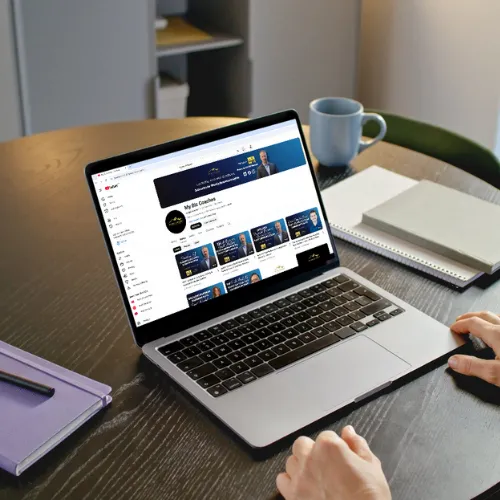
The Biz Coach Show
The Podcast of My Biz Coaches
Get weekly educational videos to help you learn how to scale your business, achieve your goals and experience success in all aspects of your life. Stream it on YouTube, Spotify and Apple Podcasts.
Biz Coach Insider
A Weekly Newsletter by Eric of My Biz Coaches
Weekly dedicated insights for entrepreneurs and business leaders committed to growth, strategy, and mastery.

Blogs
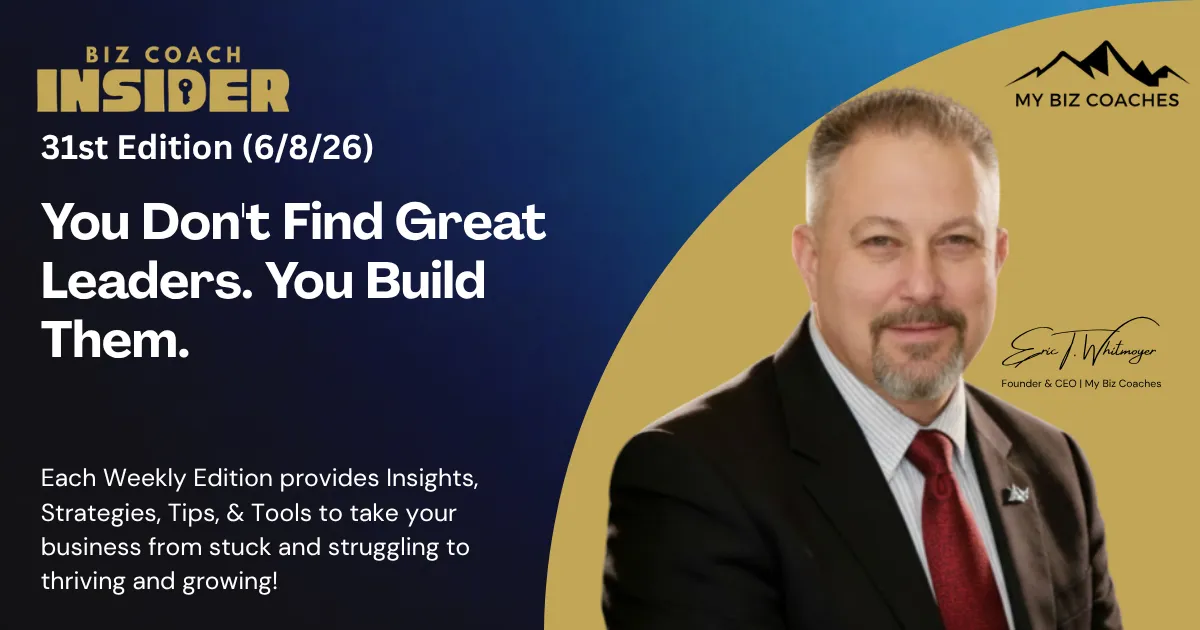
Biz Coach Insider+ - Thirty Second Edition
Biz Coach Insider - 32nd Edition (6/15/26) - You Don't Find Great Leaders. You Build Them.
Most owners are searching for the wrong thing.
They post a job, screen résumés, hire "experienced" managers, and wait for leadership to show up fully formed. It doesn't work. It almost never works. And the owners who figure that out early — they're the ones who actually scale.
Great leaders don't arrive. They're developed.
That distinction sounds simple. The execution is where most businesses fall apart.
LEADERSHIP
The Myth of the Ready-Made Leader
Every owner I've coached has said some version of this:
"I just need to find the right person."
I said it too. In wireless retail, I spent years convinced the right hire would solve my leadership gaps. I was wrong. The right hire without the right development environment produces mediocre results at best and expensive exits at worst.
Here's what actually happens when you skip the development work:
You find someone who looked great on paper. They walk in confident. Six months later, they're managing the same way they did at their last company — which is exactly what you didn't need. And you're back to square one, except now you're out a salary, a signing bonus, and six months of momentum.
➡️ The business doesn't need more people with leadership titles. It needs people who've been taught how to lead inside your business.
Here's the truth that changes everything: your best future leaders are probably already in your organization. They just haven't been invested in yet.
Why the Problem Appears at Each Phase
At the Creator phase ($0–$100K), you are the only leader. There's nothing to develop yet — you're figuring out survival.
At the Hustler phase ($100K–$250K), you start bringing in help. But they're executors, not leaders. You're still making every call.
The Operator phase ($250K–$500K) is where the leadership gap first becomes painful. You can't be everywhere. You need someone to own a function. But you haven't built a system for developing that person — so you go hire externally, and the cycle begins.
At the Leader phase ($500K–$1M), this mistake compounds. You now have a team of people who were hired but never truly developed. No one has a clear growth path. Performance is inconsistent. You're still plugging every hole.
Cross $1M into the Architect phase ($1M–$3M) without a leadership development system and growth stalls. Not because of the market. Not because of your product. Because you don't have the leaders needed to execute at the next level.
The Optimizer ($3M–$10M) and Executive ($10M–$25M) phases are built entirely on your ability to build and keep strong leaders. The business at that level is only as strong as the layer of leaders underneath you.
What does a leadership development system actually look like?
It doesn't have to be complicated. It has to be intentional.
✅ DO THIS:
1️⃣ Identify 2–3 people in your organization with raw leadership potential right now
2️⃣ Give them small leadership assignments before they have the title — let them lead a project, own a problem, run a meeting
3️⃣ Debrief regularly. Ask what they learned. Ask what they'd do differently. Coach the reflection, not just the result
4️⃣ Create a 90-day development plan for each of them — specific skills, stretch assignments, and feedback loops
5️⃣ Promote from within whenever the candidate is 70% ready. The last 30% gets learned in the role
❌ DON'T DO THIS:
❌ Wait until you're desperate to think about who's next in line
❌ Assume leadership will be "picked up" without any structure or investment
❌ Hire externally for every leadership role without first looking internally
❌ Promote someone to a leadership role and then disappear — that's not development, that's abandonment
❌ Expect someone to lead your culture who hasn't been intentionally taught what your culture requires
✳️ The businesses I've watched scale past $1M consistently have one thing in common: the owner was committed to developing leaders before they needed them.
SALES & MARKETING
Underdeveloped Leaders Are Killing Your Sales Culture
Leadership development isn't just an HR conversation. It shows up directly in your revenue.
Walk into any underperforming sales team and you'll find the same thing: a manager who was once a great salesperson and was promoted because of it. Nobody taught them how to coach. Nobody showed them how to run a pipeline review. They're managing the way they were managed — which usually means they're not really managing at all.
The result?
Your best reps carry the team. Your middle performers stay mediocre. Your bottom performers linger too long. And the manager, overwhelmed and undertrained, quietly starts thinking about leaving.
Sound familiar?
➡️ Revenue underperformance is almost always a leadership problem wearing a sales costume.
Here's what changes when you develop your sales leaders intentionally:
✅ DO THIS:
1️⃣ Train your sales managers to coach, not just to inspect numbers
2️⃣ Teach them how to run deal reviews that actually develop reps — not just status updates
3️⃣ Build a culture where losing a deal is a learning moment, not a blame moment
4️⃣ Set clear expectations for what "good management" looks like in your sales environment — inspect it weekly
❌ DON'T DO THIS:
❌ Promote your top rep without any management training and hope for the best
❌ Judge your sales managers only by team quota attainment — look at how the team is developing
❌ Let an underdeveloped sales manager keep a weak team together just to avoid the uncomfortable conversation
✳️ Ask yourself this: Is your sales manager making your team better every single week? If you can't answer yes with confidence, that's where the work starts.
FINANCIAL ACUMEN
The ROI of Building Leaders vs. The Cost of Getting It Wrong
I've seen owners spend $150,000 on a bad external leadership hire. Salary, onboarding, the mess they left behind. Six months of disruption. A team that lost trust.
Compare that to investing $10,000–$20,000 in developing your internal talent over 12 months.
The math is not close.
Leadership development is one of the highest-leverage investments a business owner can make. Here's how to think about it financially:
➡️ The Cost of a Failed Leadership Hire:
Base salary for 6–12 months before termination
Recruiting fees (typically 15–25% of first-year salary)
Lost productivity during ramp and after departure
Team morale impact and potential secondary turnover
Your time — which is the most expensive line on the P&L nobody tracks
➡️ The ROI of Developing Internal Leaders:
Lower hiring costs for leadership roles over time
Higher retention — people stay where they grow
Faster execution because leaders understand your culture and systems
Compounding return — developed leaders go on to develop others
At the Architect phase ($1M–$3M), you should have a budget line for leadership development. It doesn't need to be massive. It needs to be consistent.
✳️ The owners who build $5M+ businesses treat leadership development as a capital investment, not an expense. That mindset shift alone is worth more than most coaching I can give.
THE COACHING CORNER
For Coaches, Consultants, and Fractional Leaders
If you're a business coach or fractional executive, leadership development is one of the most underutilized services in your toolkit.
Most coaches help clients with strategy, systems, and sales. That's valuable. But the clients who grow the fastest are the ones who also become better at building the people around them.
Here's your opportunity:
Your clients don't just need a better business plan. They need to become better developers of people. That's a skill you can teach. And it's a service that creates stickier, longer-term relationships.
What does that look like in practice?
1️⃣ Audit your client's leadership bench. Who are the 2–3 people with the highest potential in their organization? Work with your client to create a specific development plan for each one.
2️⃣ Introduce leadership scorecards. Help your client build a simple framework for evaluating leadership effectiveness — not just results, but behaviors. This gives them a tool they'll use long after your engagement ends.
3️⃣ Coach the coach. Your client IS the primary leadership developer in their business. Part of your job is helping them get better at developing others. That might mean shadow coaching — sitting in on their 1:1s and giving feedback afterward.
4️⃣ Use the 8 Phases of Scale as a development framework. Where is your client's leadership team relative to where the business needs to go? If the business is at the Architect phase but the leadership team is still operating at Hustler-level thinking, that's the gap you close.
✳️ The coaches and fractional leaders I've seen build thriving practices all share one thing: they help their clients build better people, not just better businesses. That's the work that gets referrals. That's the work that builds a reputation.
As you grow your own coaching practice, ask yourself which phase you're operating from:
➡️ Are you a Creator coach — solo, scrappy, figuring out your model? ➡️ Are you a Hustler coach — busy but not yet systematic about delivery? ➡️ Or are you ready to move into Operator — building a team, creating repeatable systems, developing other coaches under your leadership?
The same principles your clients need? You need them too. Leadership development starts at home.
The question I want to leave you with this week:
Who in your organization could be a great leader — if someone invested in them?
That someone is you. And the time is now.
To Your Success,
Eric T. Whitmoyer, Business Growth Strategist
Founder & CEO at MyBizCoaches.com
Host of The Biz Coach Show
From Startup to Exit, We're There for Your Biggest Decisions
P.S. If you're serious about taking your business to the next level, then it's time to stop figuring it out alone. The Biz Mastery Network was built for owners who want structure, strategy, and real execution support without the noise. It includes The Biz Coach Insider Newsletter, designed specifically for busy business owners who need clarity fast and results faster.
Because the difference between ordinary and extraordinary isn't luck; it's the information you act on.
Consider becoming a Certified My Biz Coach – Learn More HERE.
Get In Touch
Email: [email protected]
Address
Office: 2622 E. Palm Beach Rd.
Assistance Hours
Monday to Saturday - 9:00am to 8:00pm
Sunday - CLOSED
Phone Number:
(623) 294-3795
Empowered Growth With Coaching
Trusted by owners who scaled past $10M and beyond.
© 2026 - All Rights Reserved